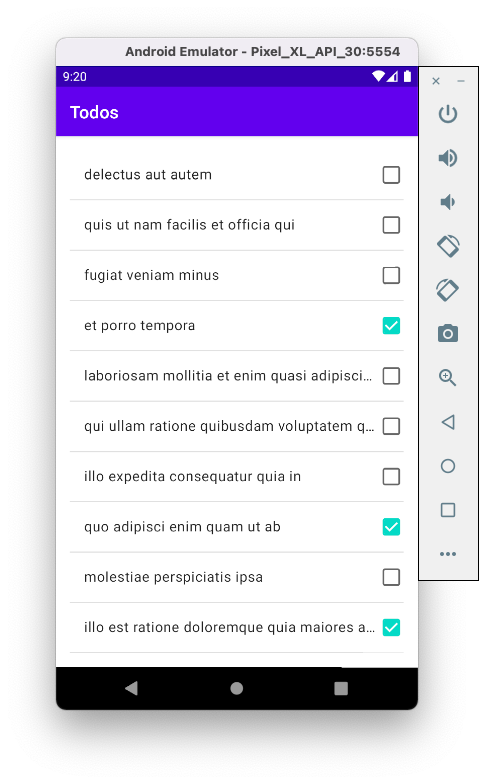
Android Jetpack Compose API Data to List View

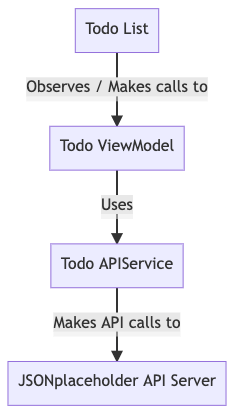
Many times we need to make API calls to fetch data and display that data using a List. Here, I show how to do that with Compose. To illustrate the structure of the application let’s look at the following diagram
Firstly, Add Internet Permission to your Application in AndroidManifest.xml
<uses-permission android:name="android.permission.INTERNET"></uses-permission>
Before we start let’s update our build.gradle file with the Retrofit HTTP client and aConverter which uses Gson for serialisation to and from JSON.:
dependencies{
...
    implementation "com.squareup.retrofit2:retrofit:2.9.0"
    implementation "com.squareup.retrofit2:converter-gson:2.0.0"
}
The Todo APIService
We need to create the Retrofit instance to send the network requests. We need to use the Retrofit Builder class and specify the base URL for the service. Here we have one GET to fetch all Todos and deserialise to List
data class Todo(
    var userId: Int,
    var id: Int,
    var title: String,
    var completed: Boolean
)

const val BASE_URL = "https://jsonplaceholder.typicode.com/"

interface APIService {
    @GET("todos")
    suspend fun getTodos(): List<Todo>

    companion object {
        var apiService: APIService? = null
        fun getInstance(): APIService {
            if (apiService == null) {
                apiService = Retrofit.Builder()
                    .baseUrl(BASE_URL)
                    .addConverterFactory(GsonConverterFactory.create())
                    .build().create(APIService::class.java)
            }
            return apiService!!
        }
    }
}
The Todo ViewModel
The View model publishes the todoList and has a getTodoList function to fetch all todos
class TodoViewModel : ViewModel() {
    private val _todoList = mutableStateListOf<Todo>()
    var errorMessage: String by mutableStateOf("")
    val todoList: List<Todo>
        get() = _todoList

    fun getTodoList() {
        viewModelScope.launch {
            val apiService = APIService.getInstance()
            try {
                _todoList.clear()
                _todoList.addAll(apiService.getTodos())

            } catch (e: Exception) {
                errorMessage = e.message.toString()
            }
        }
    }
}
The Todo View
Finally we have the view which observes the ViewModel for any todo list state changes. When changes are detected the composable rebuilds. The todo list is displayed in the view.
class MainActivity : ComponentActivity() {

    override fun onCreate(savedInstanceState: Bundle?) {
        val vm = TodoViewModel()
        super.onCreate(savedInstanceState)
        setContent {
            MaterialTheme {
                TodoView(vm)
            }
        }
    }
}

@Composable
fun TodoView(vm: TodoViewModel) {

    LaunchedEffect(Unit, block = {
        vm.getTodoList()
    })

    Scaffold(
        topBar = {
            TopBar()
        },
        content = {
            if (vm.errorMessage.isEmpty()) {
                TodoList(vm)
            } else {
                Text(vm.errorMessage)
            }
        }
    )
}

@Composable
private fun TodoList(vm: TodoViewModel) {
    Column(modifier = Modifier.padding(16.dp)) {
        LazyColumn(modifier = Modifier.fillMaxHeight()) {
            items(vm.todoList) { todo ->
                Column {
                    Row(
                        modifier = Modifier
                            .fillMaxWidth()
                            .padding(16.dp),
                        horizontalArrangement = Arrangement.SpaceBetween
                    ) {
                        Box(
                            modifier = Modifier
                                .fillMaxWidth()
                                .padding(0.dp, 0.dp, 16.dp, 0.dp)
                        ) {
                            Text(
                                todo.title,
                                maxLines = 1,
                                overflow = TextOverflow.Ellipsis
                            )
                        }
                        Spacer(modifier = Modifier.width(16.dp))
                        Checkbox(checked = todo.completed, onCheckedChange = null)
                    }
                    Divider()
                }
            }
        }
    }
}

@Composable
private fun TopBar() {
    TopAppBar(
        title = {
            Row {
                Text("Todos")
            }
        })
}